If you are reading this in a panic at 2am with a cold, limp newborn puppy in your hands — take a breath. This page exists for exactly this moment. The Myra Savant Harris fading puppy formula has saved more newborn puppies than I can count in my own whelping room, and the recipe is sitting right here, ready to go.
Myra Savant Harris is one of the most respected names in small breed whelping. Her books and her protocol have been passed around between breeders for years, and her fading puppy formula is the gold standard emergency mixture for a neonate who is crashing. I want to give you the exact recipe, the why behind every ingredient, and the steps that actually save the puppy — not just keep them alive for another hour.
Who Is Myra Savant Harris and Why Breeders Trust Her Protocol
Myra Savant Harris is a long time breeder, author, and educator focused on canine reproduction and neonatal care. She has written several books on whelping and puppy intensive care that are considered required reading for small breed and toy breeders. Her work covers everything from breeding cycle timing to c-sections to neonatal resuscitation, and her fading puppy formula is one of the most quoted parts of her teaching.
The reason breeders trust her protocol is simple — it works. Her formula combines fast acting sugar to pull a puppy out of a hypoglycemic crash, electrolytes to rehydrate, calorie dense gel for sustained energy, and a milk replacer for actual nutrition. Each piece does a specific job, and the ratio matters.
What Is a Fading Puppy? Signs You Need This Formula Right Now
A fading puppy is a newborn — usually under 3 weeks old — that is failing to thrive and slipping away. They were fine, and suddenly they are not. Fading puppy syndrome is not one single illness — it is the final downhill slide that can be caused by hypothermia, hypoglycemia, dehydration, mom rejecting them, weak suckle reflex, infection, or low birth weight. The end result looks the same no matter the cause.
Here is what a fading puppy looks like. If you see these signs, you do not wait — you start treatment right now:
1. The puppy feels cold to the touch. Their body temp is dropping below 96°F and they cannot warm themselves. 2. They are limp, weak, and floppy. They have lost their righting reflex. 3. They are not nursing or have stopped trying to nurse. 4. They cry weakly, or worse — they have gone silent and stopped crying altogether. 5. Their gums are pale, white, or blue instead of bright pink. 6. They are gasping, mouth breathing, or making a weak open mouth motion. 7. They feel lighter than their littermates — losing weight instead of gaining.

If you have a baby scale (and every breeder of small dogs should), weigh every puppy twice a day for the first two weeks. A puppy who is not gaining weight or — worse — losing weight, is a puppy heading toward fading. Catching it early is the difference between a save and a loss.
The Myra Savant Harris Fading Puppy Formula — Exact Recipe
Here is the recipe. Mix it fresh — do not make a giant batch and store it for days. I keep all the ingredients in a labeled bin in my whelping closet so when the moment hits, I am not searching.
Ingredients You Need on Hand Before You Whelp
✦ Light Karo syrup (white corn syrup). Fast acting sugar that absorbs through the gums straight into the bloodstream. This is the emergency component.
✦ Unflavored Pedialyte. Electrolytes and fluid for rehydration. Plain only — not the colored, flavored kind.
✦ NutriCal or Nutri-Stat high calorie gel. Dense calories that sustain the puppy after the karo kicks in.
✦ Esbilac powder puppy milk replacer (or fresh whole goat milk if you prefer). This is the actual food once the puppy is stable enough to digest.
✦ Distilled or boiled-then-cooled water for mixing the Esbilac.
The Mixing Ratio
Myra's classic ratio for the emergency formula is roughly equal parts of each base ingredient. The simple, easy to remember version that has lived on whelping shelves for years is: 1 part Karo syrup, 1 part unflavored Pedialyte, 1 part prepared Esbilac (mixed per the can), and a pea sized squeeze of NutriCal stirred in. Some breeders run it 2 parts Pedialyte to 1 part Karo to thin it for very tiny puppies — adjust to the size of the dog you are working with.
Warm the mixture gently — body temperature, not hot. Test a drop on the inside of your wrist the way you would test a baby's bottle. Cold formula in a cold puppy will not work, and may actually make things worse because a cold puppy cannot digest.
How Much to Give by Puppy Weight
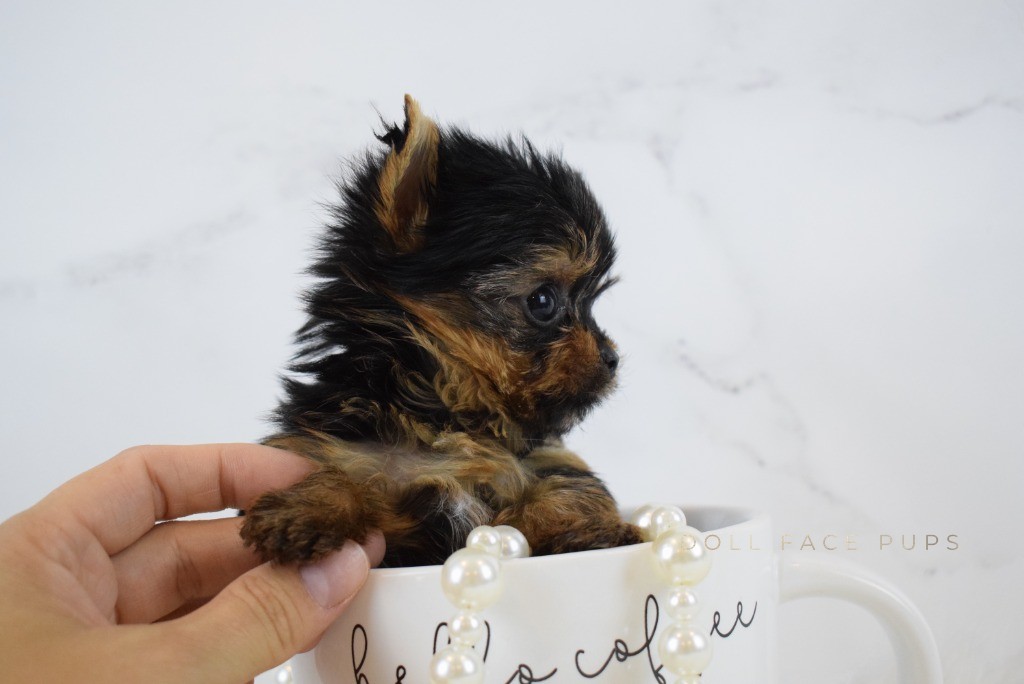
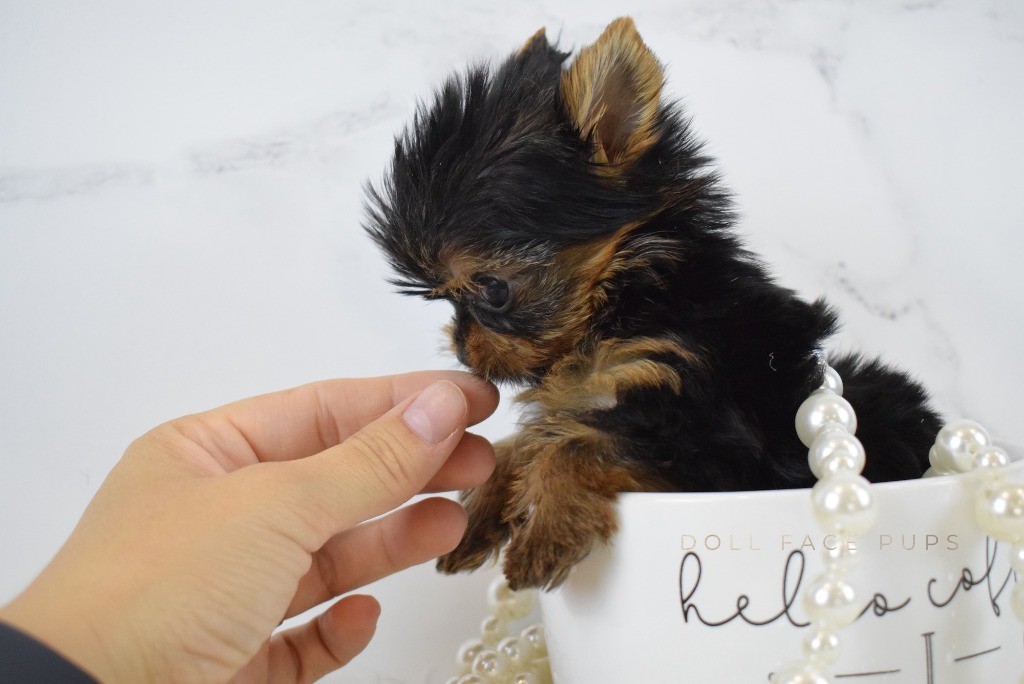
For a tiny Yorkie or other toy breed newborn (2 to 6 ounces), you are giving 2 to 4 drops at a time, every 15 to 30 minutes during the crisis, slowly increasing the amount and decreasing the frequency as the puppy stabilizes. For a larger newborn (8 to 16 ounces), you can give a quarter to a half cc at a time. Do not overfill — a stressed neonatal stomach is tiny and aspiration is the number one risk.
How to Administer the Formula Step by Step
1. WARM THE PUPPY FIRST. I cannot say this loud enough. A cold puppy cannot digest. If you put formula into a puppy whose core temp is below 94°F, you can kill them. Warm them first. We will cover the warming method in the next section.
2. Rub a drop or two of Karo syrup directly onto the puppy's gums and the inside of their cheeks. This absorbs through the mucous membranes directly into the bloodstream — they do not need to swallow it to benefit from it. This is your immediate jumpstart.
3. Once warm and you see a flicker of response (small movement, a stronger cry, a swallow reflex), use a 1cc syringe with no needle, or an eyedropper, to give the mixed formula. Place it on the side of the mouth, not the front. Go slow — one drop, let them swallow, one more drop. Never squirt formula into a puppy's mouth — it will aspirate into the lungs.
4. Repeat every 15 to 30 minutes until the puppy is warm, pink, vocalizing, and actively swallowing on their own. Then space it out to every 1 to 2 hours and start moving toward Esbilac feedings only.
Warming a Fading Puppy — Do Not Skip This Step
Hypothermia is the silent killer of fading puppies. A neonate cannot regulate their own body temperature for the first 2 weeks of life — they rely entirely on mom, their littermates, and their environment. Once they get cold, their whole system shuts down. The gut stops moving, they stop nursing, blood sugar drops, and they spiral.
Warm slowly. This part is important. Do NOT throw a freezing cold newborn on a heating pad set to high. Rapid warming can cause shock. Use one of these methods:
✦ Tuck the puppy against your bare skin under your shirt. Skin to skin contact is the safest, gentlest warming method and you can feel them coming back. ✦ Use a low setting heating pad with a thick towel between the pad and the puppy — never direct contact. Set the warming spot up so the puppy can crawl off if they get too hot. ✦ A microwaved rice sock or sealed warm water bottle (warm, not hot) wrapped in a towel placed next to the puppy. ✦ An incubator or whelping nest with controlled ambient warmth around 85 to 90°F for the first week.
Once the puppy is warm — meaning they feel warm to your cheek, their belly is pink, and they are starting to move — THEN you start the formula. Warm first, feed second.
When the Formula Isn't Enough — Tube Feeding
Sometimes a fading puppy is too weak to swallow. They have no suckle reflex left. If you syringe formula into a puppy with no swallow, you will drown them in their own meal. This is when tube feeding becomes the safer option.
Tube feeding sounds scary the first time, but every small breed breeder needs to learn how to do it. You measure a soft red rubber feeding tube from the puppy's nose to their last rib, mark the tube, slide it in down the esophagus, double check you are in the stomach and not the lungs, and slowly push the formula in with a syringe. If you have never done this, ask your vet to walk you through it during a healthy whelping appointment — do not learn for the first time during a crisis.
After the Crisis — Reintroducing Mom and Watching for Relapse
Once the puppy is warm, pink, vocal, and gaining weight on the formula, you start the slow transition back to mom. Place the puppy back on a teat that has been gently expressed (so they get a little reward instantly) and watch them latch and suckle. If mom rejects the puppy or the puppy still cannot nurse on its own, you continue supplementing with Esbilac every 2 to 3 hours around the clock until they can.
Watch them like a hawk for the next 48 hours. Fading puppies relapse. The cause is still in their body — whether it was infection, weak digestion, or low birth weight — and another crash is possible. Keep weighing them. Keep their temperature stable. If they fade a second time, get the vet involved.
What Causes Fading Puppy Syndrome So You Can Prevent It
1. Hypothermia. The number one cause. Whelping rooms that are too cool, drafty whelping boxes, or pulling a puppy away from mom too long during cleanup all chill a neonate fast.
2. Mom's milk issues. If mom has eclampsia (milk fever), mastitis, or simply isn't producing enough, the puppies starve quietly. Watch mom's calcium, watch her milk supply, and supplement early if you see lagging puppies.

3. Low birth weight. The runt of the litter is the most vulnerable. Tiny puppies have less fat reserve and crash faster. I supplement my runts proactively from day one.
4. Infection. Bacterial infections, herpesvirus, and parasites can take down a whole litter quickly. Keep the whelping area clean, restrict visitors, and watch for swollen umbilicals or unusual smells.
5. Weak suckle reflex. Some puppies are just born with a poor latch. Stimulate them, help them find the teat, and supplement them until they figure it out.
6. The hypoglycemia loop. Once a puppy gets cold, they stop nursing. Once they stop nursing, their blood sugar drops. Once their blood sugar drops, they get colder. The Myra formula is designed to break this loop.
When to Call the Vet vs Treat at Home
I am the first to say I treat a lot at home — I have been breeding micro Yorkies long enough to handle the routine stuff. But there are moments when you call the vet without hesitating:
✦ Gray gums (not white — gray). Gray is dying. ✦ Active seizing. ✦ A puppy who responds to the formula and then crashes a second time within 24 hours. ✦ Bloody, foul, or yellow discharge from anywhere on the puppy. ✦ The whole litter is fading at the same time — that points to infection. ✦ Mom is sick, has a fever, or has bloody discharge of her own. ✦ A puppy who fails to respond to warming and the formula within an hour.
Call your vet during the day, but know your nearest 24 hour emergency vet's address before you whelp. You do not want to be searching for it at 3am with a fading puppy in a towel.
Janet's Notes from Breeding Micro Yorkies
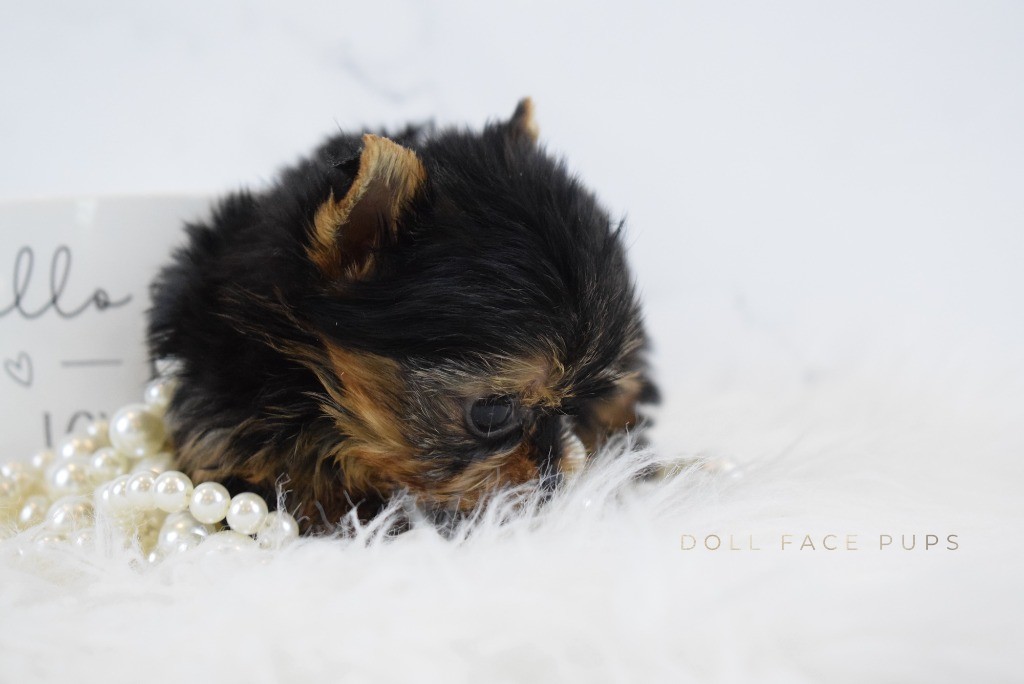
I breed extremely tiny moms and even tinier puppies at Doll Face Pups. The Myra Savant Harris fading puppy formula is one of the tools that has made it possible for me to raise micro Yorkies successfully — because the smaller the puppy, the smaller the margin for error. A 2.5 ounce newborn does not have the fat reserves of a 12 ounce Labrador puppy. They crash faster, they crash harder, and the window to save them is shorter.
Keep the ingredients prepped before mom is even due. Have your warming setup ready. Have a baby scale on the counter. Have your vet's number on the fridge. The breeders who lose the fewest puppies are not the ones with the most expensive equipment — they are the ones who are prepared and who do not panic. Myra's formula gives you a way to be both.