A Guide to Yorkie Colors
The genetics behind every color we produce — with real photos of our parents and puppies
Yorkshire Terriers come in far more colors than most people realize. Beyond the classic black & tan, we breed for chocolate, parti, merle, gold, and rare combinations of all of these. Each color is the result of a specific combination of genes inherited from mom and dad.
Every parent in our program is DNA tested through Embark so we know exactly what they carry. Below is a walkthrough of every color in our lines, with real photos and the genetic recipe behind each one.
Color Genetics 101
Dog coat color is controlled by a handful of genetic locations called loci. Here is the cheat-sheet:
Extension — controls whether black pigment can be produced at all. ee = no black anywhere (clear/gold).
Dominant black — KB overrides everything else and makes the dog solid black. Most Yorkies are kyky.
Agouti pattern — At/At gives tan points (the classic Yorkie pattern). Ay gives sable.
Brown — two recessive b's (bb) turn every black part of the dog into chocolate. Bb dogs LOOK black but carry chocolate.
Spotting — sp/sp adds white piebald patches (parti). One copy = no visible white. Two copies = parti.
Merle — Mm creates the marbled dappled effect and often blue eyes. MM is double-merle and dangerous. mm is non-merle.
Dilute — dd lightens black to blue-gray and chocolate to lilac. Rare in Yorkie lines.
The Colors We Breed
Every color below has been produced in our own kennel. Click any photo to meet the parent.
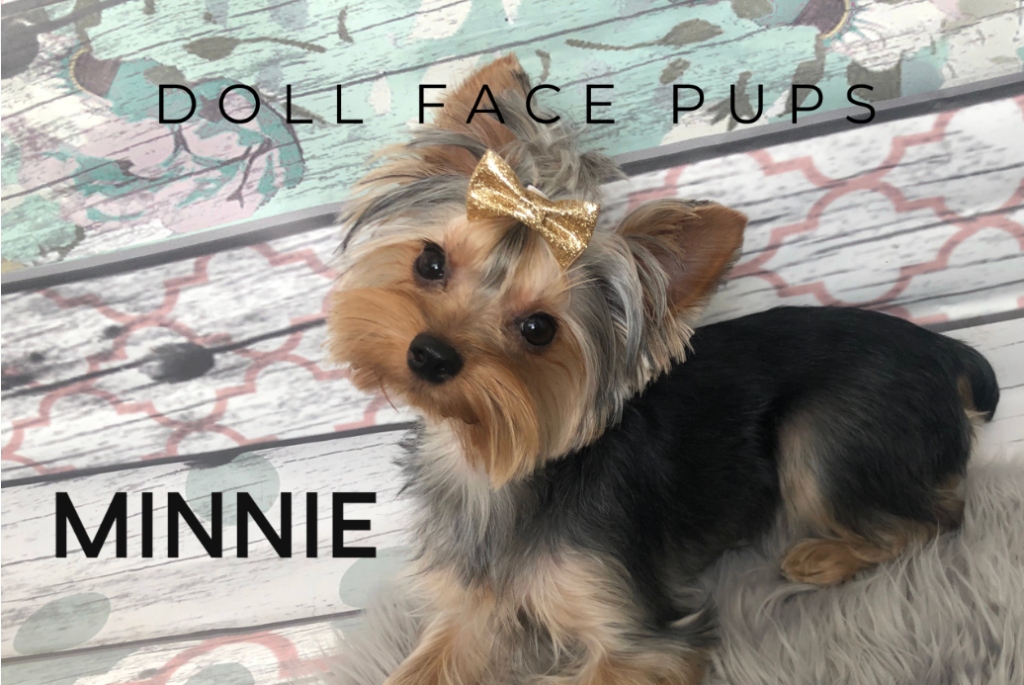
Traditional Black & Tan
The classic, iconic Yorkshire Terrier color
This is the color most people picture when they hear the word "Yorkie." Puppies are born almost entirely black with subtle tan points above the eyes, on the muzzle, chest, and feet. As they mature, the black gradually lightens into the famous steel-blue saddle of an adult show Yorkie. The tan points stay warm and rich.
At/At at the A locus (tan points) · BB at the B locus (full black eumelanin) · KyKy at the K locus (lets the agouti pattern show through). No parti, no merle, no dilute.
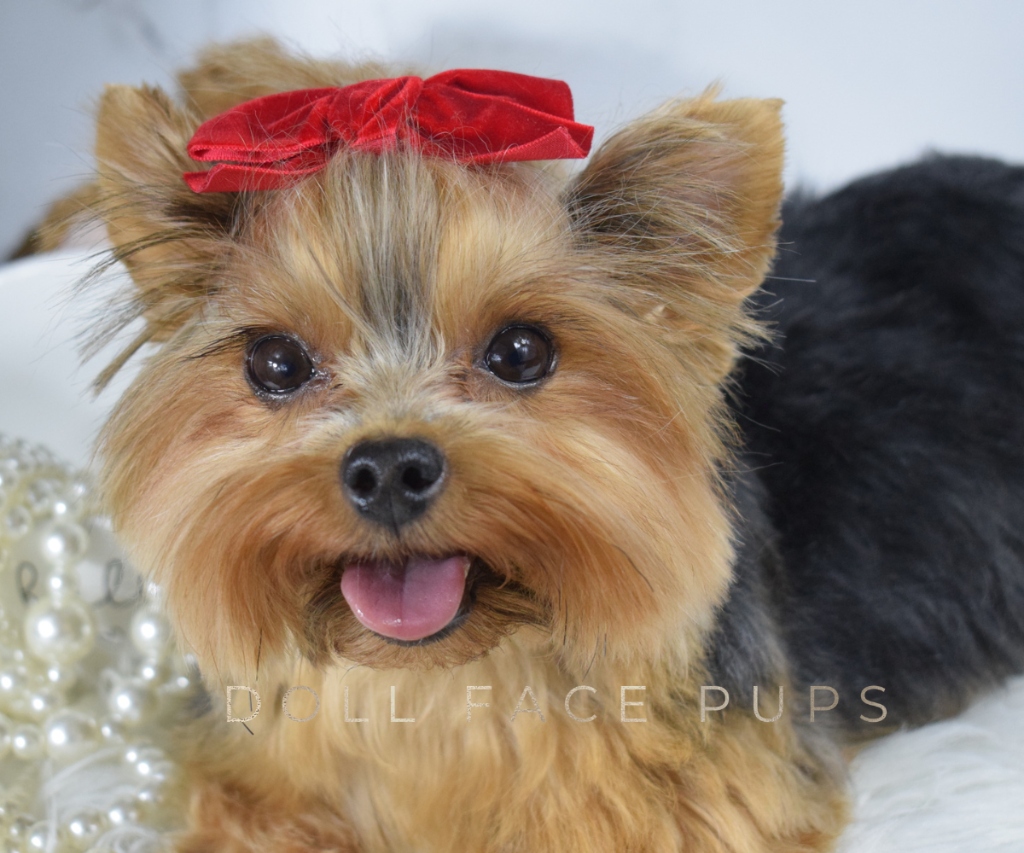
Black & Gold
Richer, brighter, longer-lasting gold
Genetically very similar to a Traditional Black & Tan, but the tan points carry far more intensity and stay vivid into adulthood instead of fading to a paler tan. The black areas may also retain a deeper, warmer hue. This is the look that wins show rings — striking contrast and that signature lustrous gold.
At/At · BB · KyKy — same backbone as Traditional Black & Tan, with phaeomelanin intensifier modifiers producing the deeper, longer-lasting gold pigment.
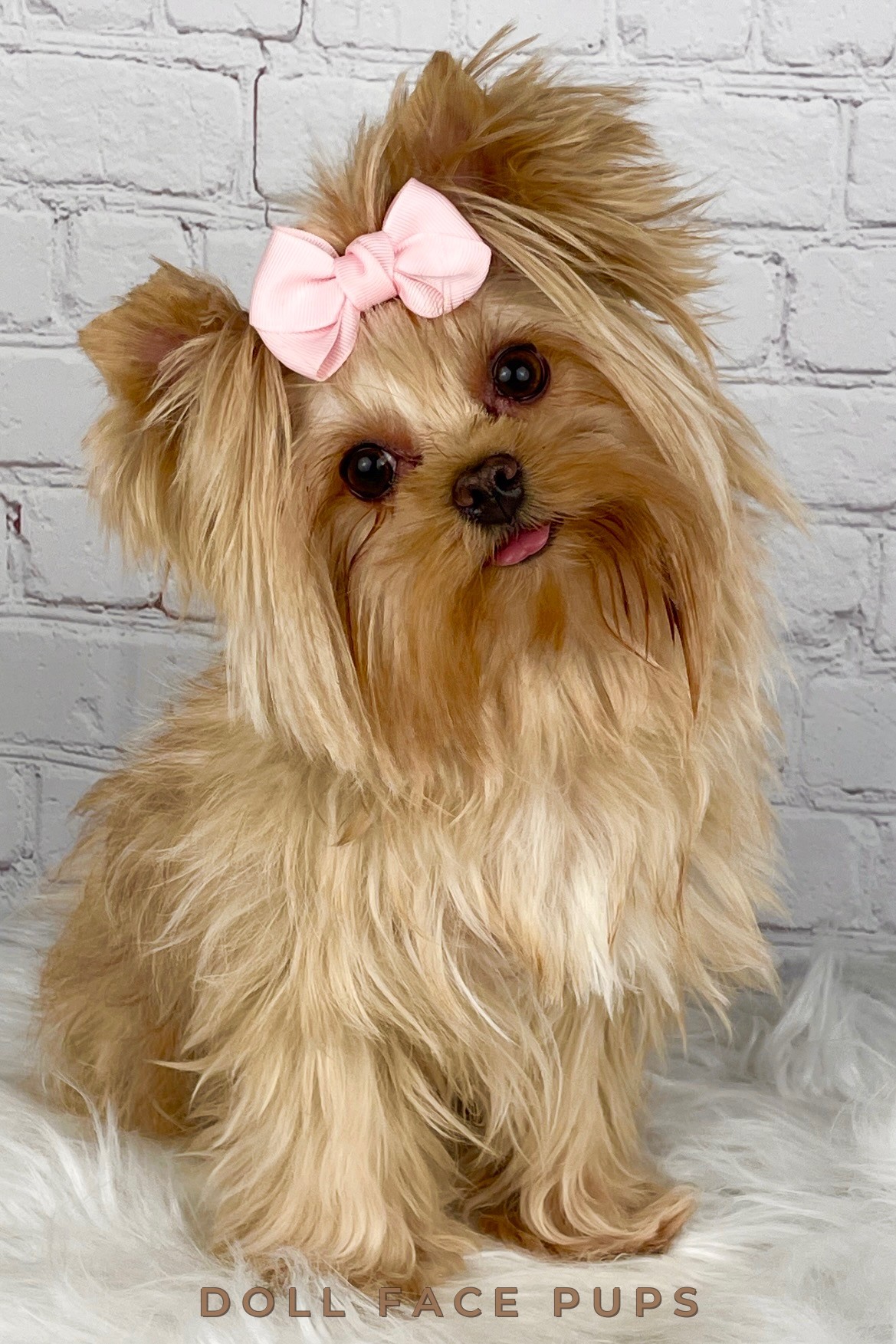
Blonde / Gold (Clear)
All-over gold with no black mask
A completely solid blonde or gold Yorkie. There is no steel-blue saddle, no dark points, no mask — the whole coat is one warm honey shade. This look is created by a recessive "e/e" at the E locus, which blocks the production of any black/eumelanin pigment in the coat (so even a genetically black & tan dog comes out solid gold when ee is homozygous).
ee at the E locus (recessive red / clear) — completely shuts off black pigment in the coat. The dog may still genetically carry black, parti, or chocolate underneath, but visually you only see gold.
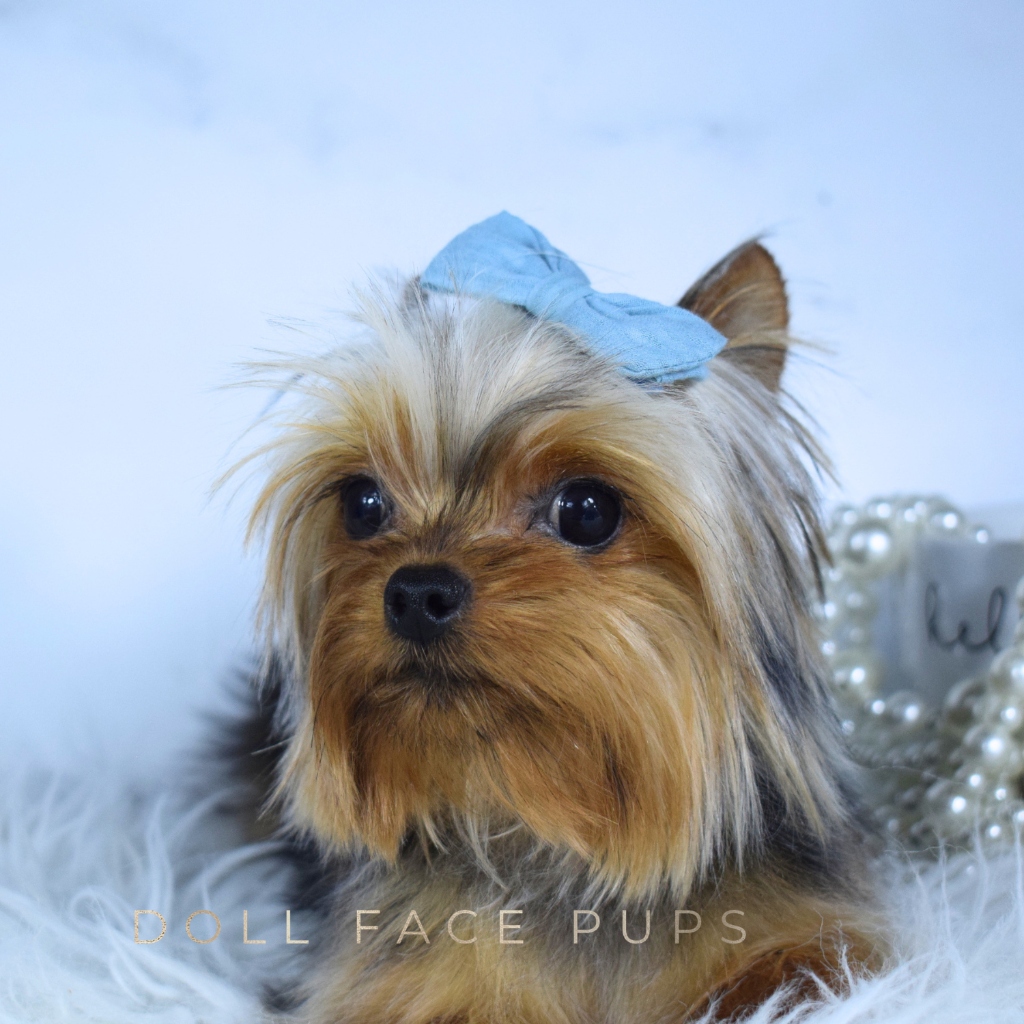
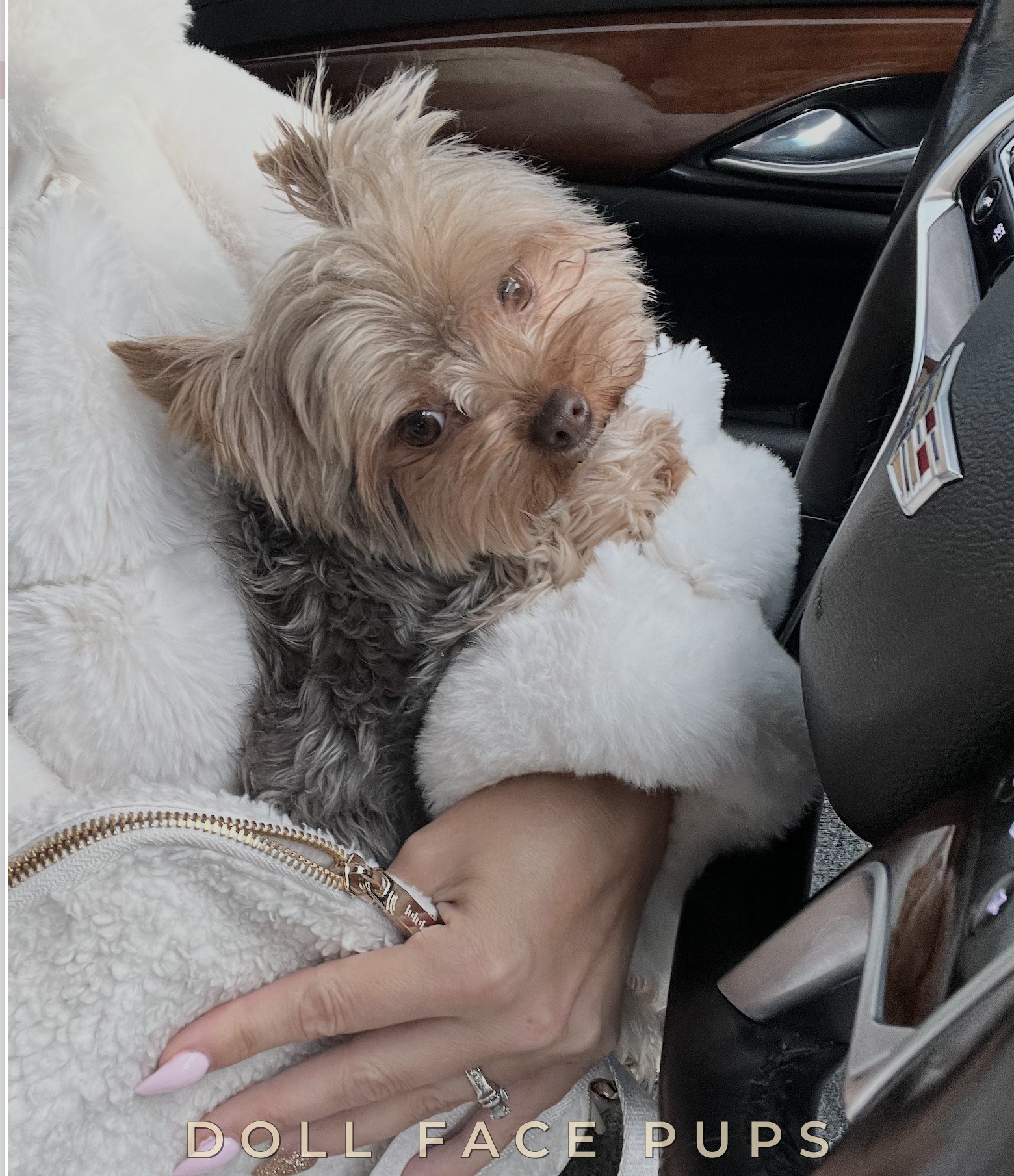
Traditional Black & Tan (carrying Chocolate)
Looks traditional, but carries the chocolate gene
Visually identical to a regular Traditional Black & Tan Yorkie, but the dog has one copy of the recessive chocolate gene (Bb). They themselves are black & tan, but bred to another chocolate-carrier, statistically 25% of their puppies will be visually chocolate. Carriers are how this color is preserved in a breeding program.
At/At · Bb (1 chocolate, 1 black — chocolate is hidden) · KyKy.
Chocolate & Tan (Liver & Tan)
Same pattern, every black becomes warm brown
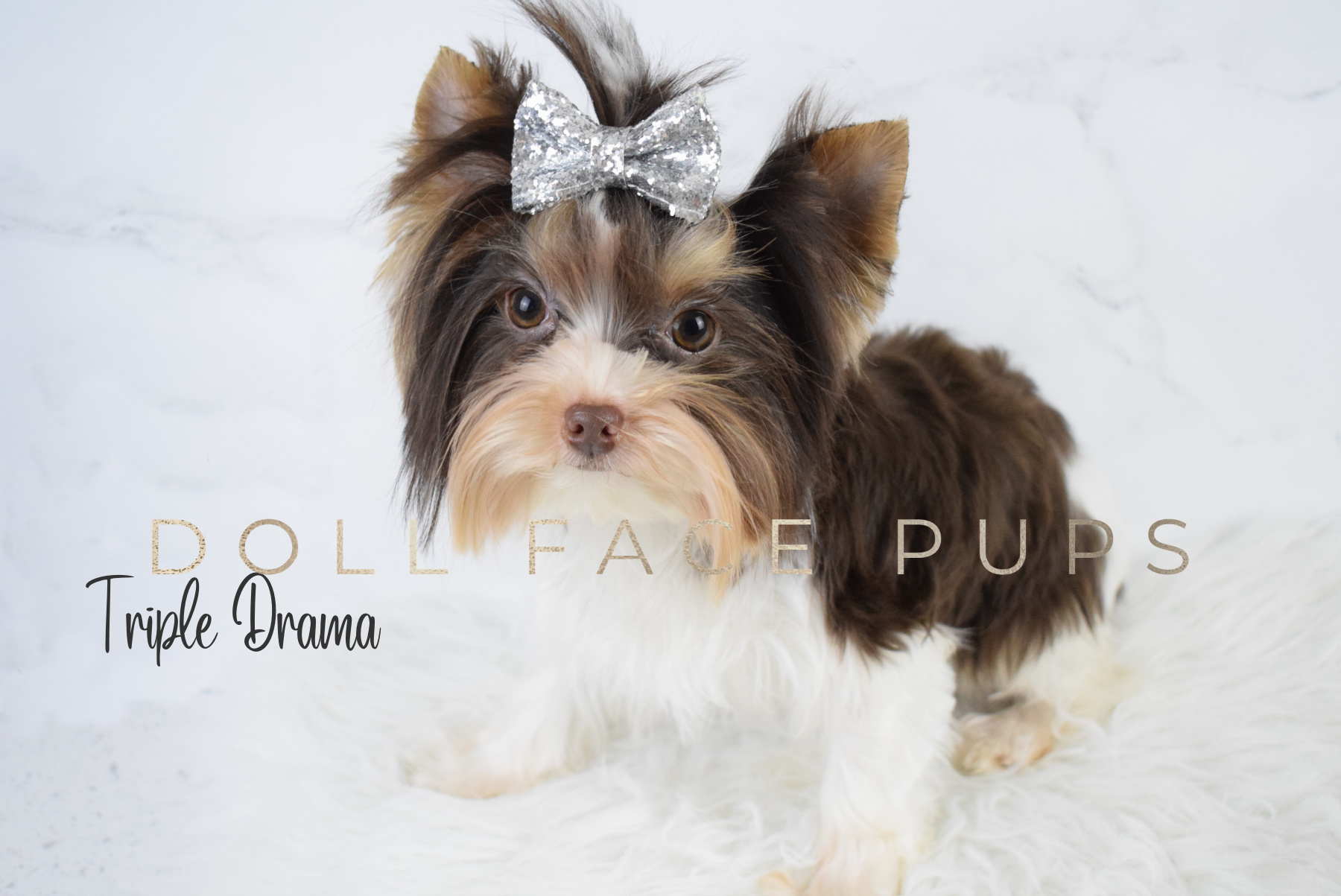
Every part of the dog that would be black in a Traditional Yorkie becomes a rich chocolate brown — the saddle, the nose, the eye rims, the paw pads, even the toenails. The tan points remain. The eyes also frequently lighten to a warm amber or hazel. This is one of the most striking and rarest of the Yorkie colors.
At/At · bb at the B locus (TWO copies of recessive chocolate, fully expressing) · KyKy.
Chocolate Parti
Chocolate + tan + white piebald spotting
Combines the chocolate base with the parti (piebald) gene, which adds large irregular patches of pure white to the coat. The result is a dog with chocolate, tan, AND white — often with stunning facial markings, a white chest, white legs, and a white-tipped tail. Every parti coat is a completely unique pattern.
At/At · bb · KyKy · sp/sp at the S locus (two copies of parti / piebald — adds the white spotting).
Chocolate Parti Merle (Biewer Variant)
Chocolate parti + the magical merle modifier
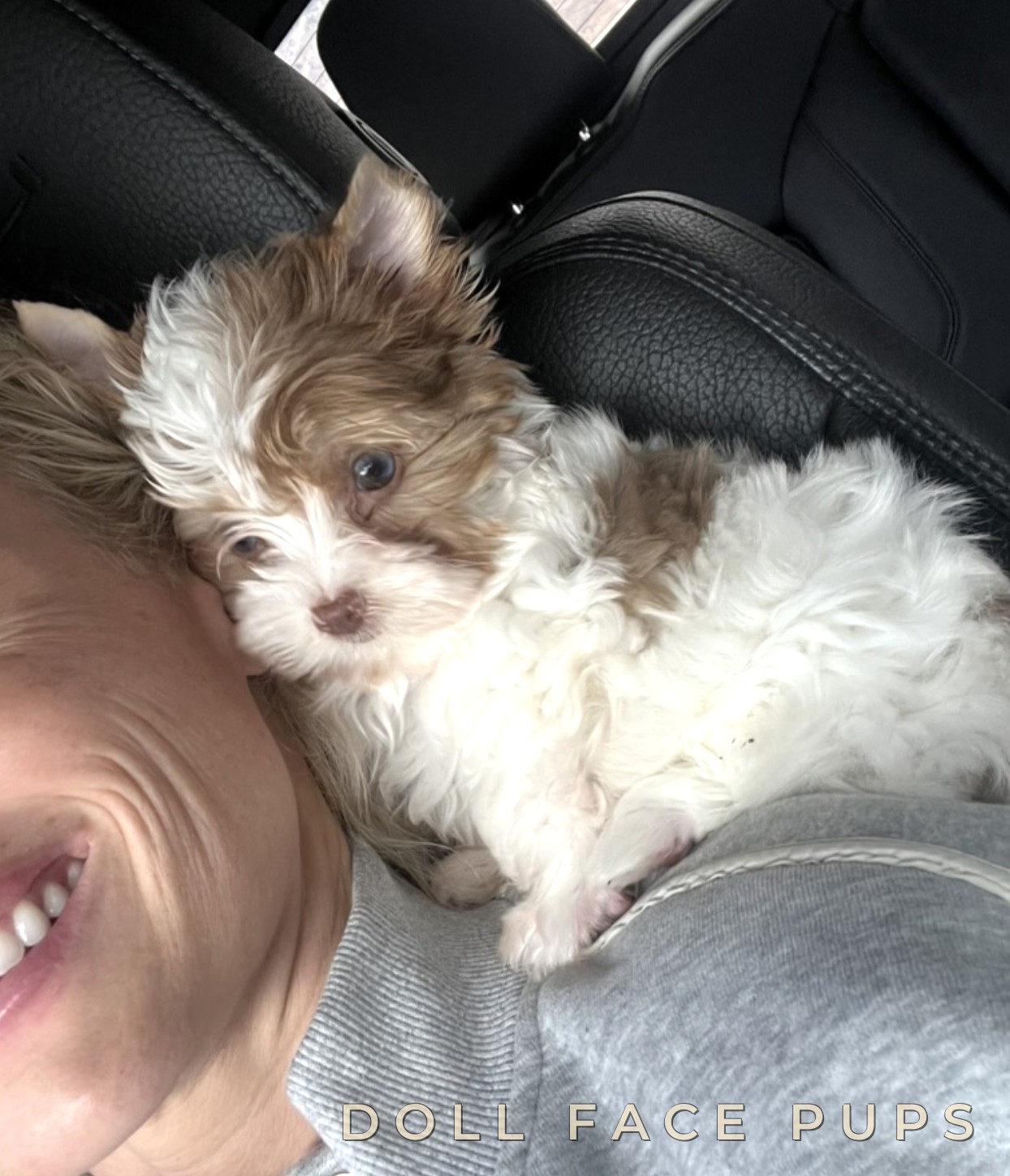
The merle gene adds randomized lightening throughout the darker patches of the coat, creating a marbled or dappled effect — and frequently producing one or both blue eyes. In a chocolate parti dog, merle creates a breathtaking palette of cream, warm chocolate, and lighter mottled patches. A single copy (Mm) is what you want — double merle (MM) causes serious health issues and ethical breeders never combine two merles.
At/At · bb · KyKy · sp/sp · Mm at the M locus (ONE copy of merle — never two).
Solid Black (Shih Tzu)
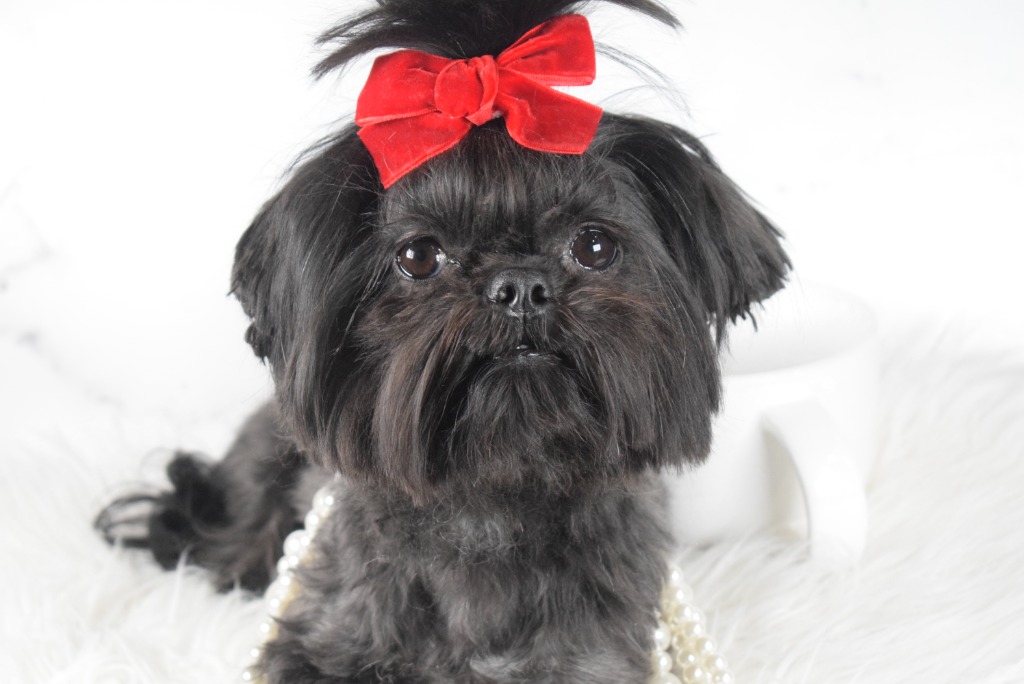
Pure jet-black, no other colors
A truly solid black dog with no tan points, no white, and no fading to silver as they age. This is a dominant-black phenotype controlled by the K locus rather than the A locus pattern that creates tan points. Common in Shih Tzu and rare in Yorkie lines.
KB at the K locus (dominant black — masks any pattern at the A locus) · BB.
Try Our Color Calculator
Curious what colors a specific pairing could produce? Plug in the genetic results from each parent's Embark DNA test and see the predicted color distribution for their puppies.
Yorkie Color Calculator
Select the genetics for Sire and Dam to predict puppy color outcomes
Sire
Dam
More Colors on the Way
Our current Honey × Luca litter is producing chocolate sable and chocolate sable parti boys — colors so rare that most Yorkie buyers have never seen them. As each new color emerges in our program, we will photograph it, document the genetics behind it, and add it to this guide.